Le Greg: A Modern Sans Serif Font for Web Design
I was working on a new boutique website last week, and I needed a font that felt both fresh and trustworthy. That’s when I discovered Le Greg. As a web designer, I’ve tested countless typefaces, but Le Greg stood out with its clean lines and modern elegance. It’s the kind of font that feels like it belongs in any digital space—from a minimalist portfolio to a high-end online store.
Elegant Simplicity Meets Digital Flexibility
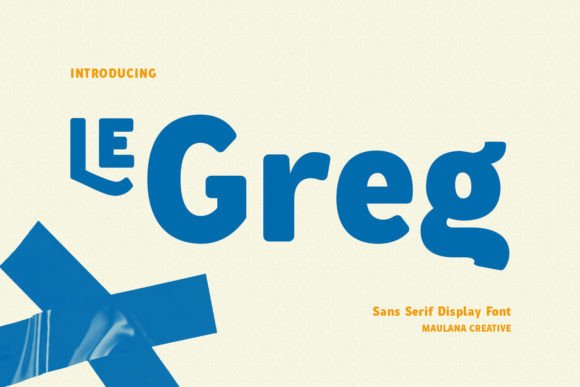
Le Greg is an elegant and modern sans serif font, and that description doesn’t do it justice. Its minimalist vibe makes it incredibly versatile. The letters are crisp, the curves are smooth, and there’s a subtle charm that makes it feel approachable without being too casual. When I first applied it to a hero section over a full-screen image, the contrast was perfect. It didn’t overpower the background, yet it commanded attention just enough to guide the user’s eye toward the call-to-action button.
What I love most about Le Greg is how well it scales across different screen sizes. On mobile, where every pixel counts, the font remains legible even at smaller sizes. It doesn’t get jagged or pixelated, which is a big plus for responsive design. Whether it’s a headline, a section title, or a decorative accent, Le Greg adapts seamlessly.
Perfect for Branding and Visual Hierarchy
I used Le Greg as the primary display font for a coaching website I recently redesigned. The client wanted something professional but not too stiff—something that reflected their personality while still feeling credible. Le Greg fit perfectly. It gave the site a modern, clean look that aligned with the brand’s identity.
When paired with a simple sans serif body font like Helvetica or Arial, Le Greg created a balanced visual hierarchy. The headlines popped, and the body text remained easy to read. This combination worked especially well in blog posts and product pages, where readability is key.
I also experimented with using Le Greg for buttons and form labels. While it wasn’t the best choice for long paragraphs or dense content, it added a nice touch of personality to interactive elements. The font’s subtle weight variation helped differentiate between primary and secondary actions, making the interface feel more intuitive.
Considerations for Web Use
While Le Greg excels in display use, it’s important to recognize its limitations. It’s not ideal for long blocks of text, especially in small navigation menus or form fields. If you’re building a site with a lot of body copy, pair it with a more readable body font and reserve Le Greg for headings, logos, or accents.
Another thing to keep in mind is accessibility. Since Le Greg has a relatively light weight, it might not be the best choice for dark mode interfaces unless you ensure sufficient contrast. Testing it across different color schemes and backgrounds is essential to maintain usability.
Before implementing Le Greg on a live site, I recommend checking the available styles, weights, and file formats. Make sure it supports all the languages you need and that you have the proper commercial license if you're using it for client projects or online stores.
Real-World Examples and Pairings
I used Le Greg on a product landing page for a handmade candle shop. The font looked great on the hero headline, and I paired it with a soft serif font for the supporting text. The result was a harmonious blend of modern and traditional aesthetics that matched the brand’s handcrafted vibe.
For a course sales page, I placed Le Greg on a prominent CTA button. The boldness of the font made the button stand out, and the clean lines kept the overall design from feeling cluttered. It was a subtle but effective way to draw attention without overwhelming the user.
When designing a digital brand kit, I included Le Greg as the main display font alongside a few complementary fonts for different use cases. This approach allowed me to maintain consistency across the brand’s web presence while keeping the typography flexible enough to suit various layouts.
Overall, Le Greg is a fantastic addition to any web designer’s toolkit. It brings a sense of sophistication and modernity to digital projects, whether you're working on a personal portfolio, a boutique website, or a high-traffic e-commerce platform. Just remember to use it wisely—where it adds value, not where it complicates the design.